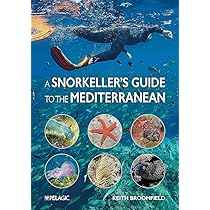
Book Review: A Snorkeller’s Guide to the Mediterranean by Keith Broomfield
At first glance, A Snorkeller’s Guide to the Mediterranean by Keith Broomfield might appear to sit firmly in the snorkelling camp. In reality, it is a quietly excellent reference for freedivers, particularly those who value environmental awareness, site familiarity, and a deeper understanding of the underwater world they move through on a single breath.
From the opening preface, Broomfield’s passion for the Mediterranean is clear. His fascination began in the early 1980s, sparked by simple mask-and-snorkel exploration, and grew into a lifelong relationship with the region’s marine life. That long view matters. This is not a hurried guide built for tourists ticking off species; it is a book shaped by decades of observation, repeat visits, and genuine affection for the sea. For freedivers who often return to the same locations year after year, this perspective resonates strongly.
A Natural Fit for Freedivers
While the title references snorkelling, much of the book’s content aligns naturally with freediving practice. Freedivers spend extended time in the top 5 t0 20 metres, precisely the depth range where Mediterranean biodiversity is richest and most observable. Broomfield’s focus on shallow-water habitats, coastal geography, and common species makes the book directly applicable to breath-hold divers training or exploring along Mediterranean coastlines.
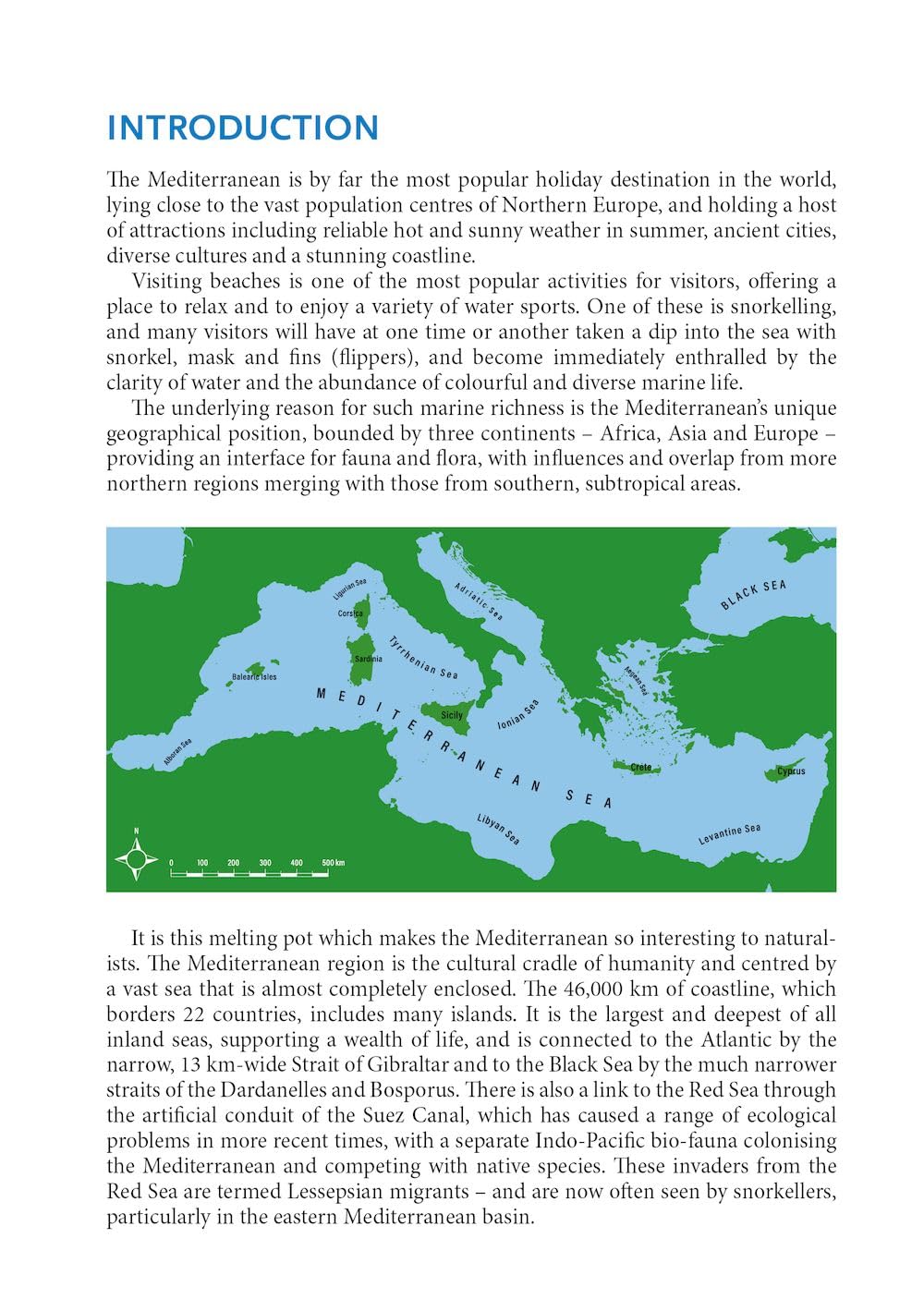
The introduction sets the scene well, explaining why the Mediterranean is so biologically diverse despite its relatively enclosed nature. Its position between Africa, Europe, and Asia has created a melting pot of species from different climatic zones. For freedivers, this context adds meaning to every dive: rocky reefs, seagrass meadows, and drop-offs are no longer just training environments, but living systems shaped by geology, currents, and history.
Species Awareness and Dive Quality
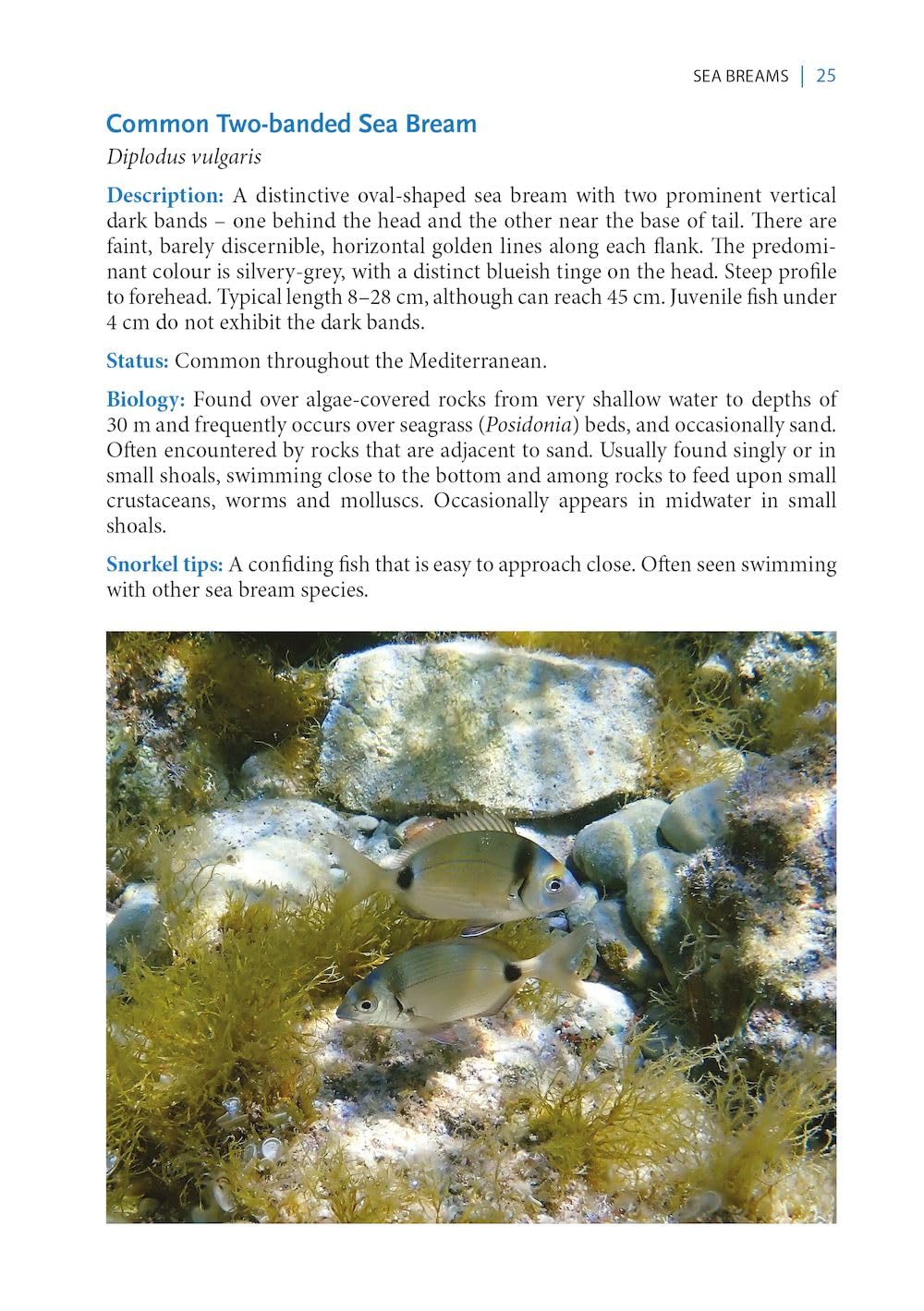
One of the book’s biggest strengths for freedivers is species identification. Freediving encourages calm, slow movement and close observation, exactly the conditions under which marine life reveals itself. Knowing what you are looking at transforms a dive from a purely physical exercise into an immersive experience.
Broomfield presents marine life in an accessible, non-academic way, making it easy to absorb information between dives or during trip planning. For freediving instructors and trip leaders, this is especially useful. Being able to brief students on what they might encounter groupers tucked into rocky overhangs, damselfish guarding nests, or octopus changing colour along a reef adds real educational value to a session and deepens respect for the environment.
Environmental Sensitivity and Responsible Diving
Freedivers are often among the least intrusive ocean users, and this book reinforces that ethic. Broomfield writes with clear respect for marine ecosystems, encouraging careful observation rather than interaction. This aligns well with modern freediving principles: neutral buoyancy, relaxed descents, and minimal impact.
The Mediterranean faces pressures from tourism, warming waters, and overfishing. Understanding what “normal” looks like what species belong where, and which habitats are most sensitive helps freedivers become better stewards of the places they train and explore. This book quietly supports that role without preaching.
Practical Value for Mediterranean Trips
For UK based freedivers, the Mediterranean remains one of the most accessible and rewarding regions for warm water training, courses, and trips. Whether you are planning sessions in Spain, Italy, Greece, Malta, or Croatia, A Snorkeller’s Guide to the Mediterranean works well as pre-trip reading or a lightweight companion during travel.
It does not attempt to replace detailed dive guides or depth specific freediving manuals and that is not its aim. Instead, it complements them by enriching what happens between dives, during surface intervals, or while finning along a reef in shallow water.
Final Thoughts
Keith Broomfield’s book succeeds because it understands something freedivers know instinctively: depth is not the only measure of a good dive. Awareness, curiosity, and connection matter just as much.
For freedivers who want to improve their environmental knowledge, enhance the quality of their Mediterranean dives, or add an educational layer to courses and trips, A Snorkeller’s Guide to the Mediterranean is a worthwhile and rewarding read.
Review by Steve Millard